Support of Journalism
Marketing and Audience Engagement
A question that me and my Managing Editor ask ourselves quite often is how we are going to get the student body, and our peers interested in reading our paper. It’s difficult as a student media program to find a way to engage with our students that isn’t just on social media.
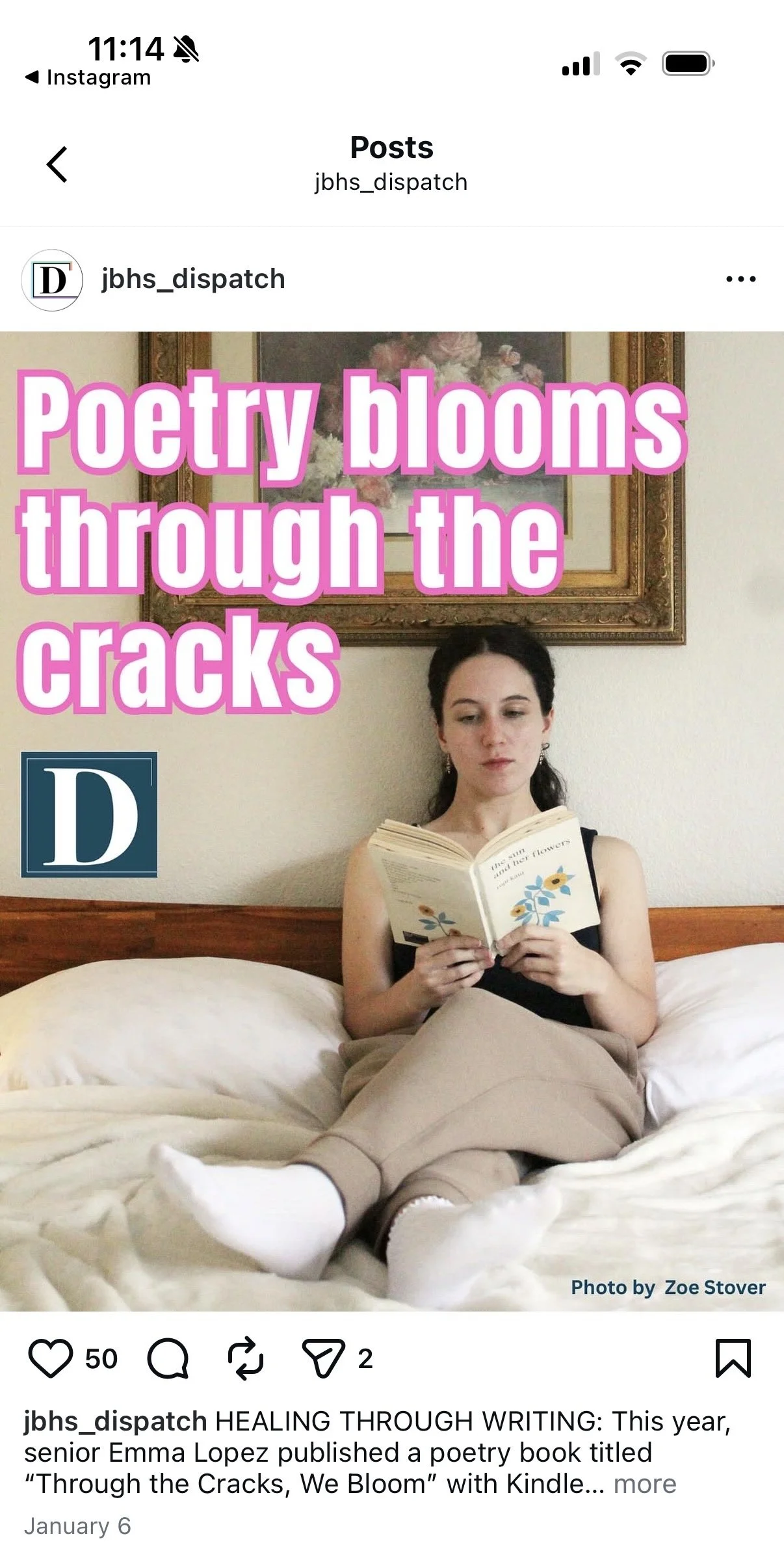
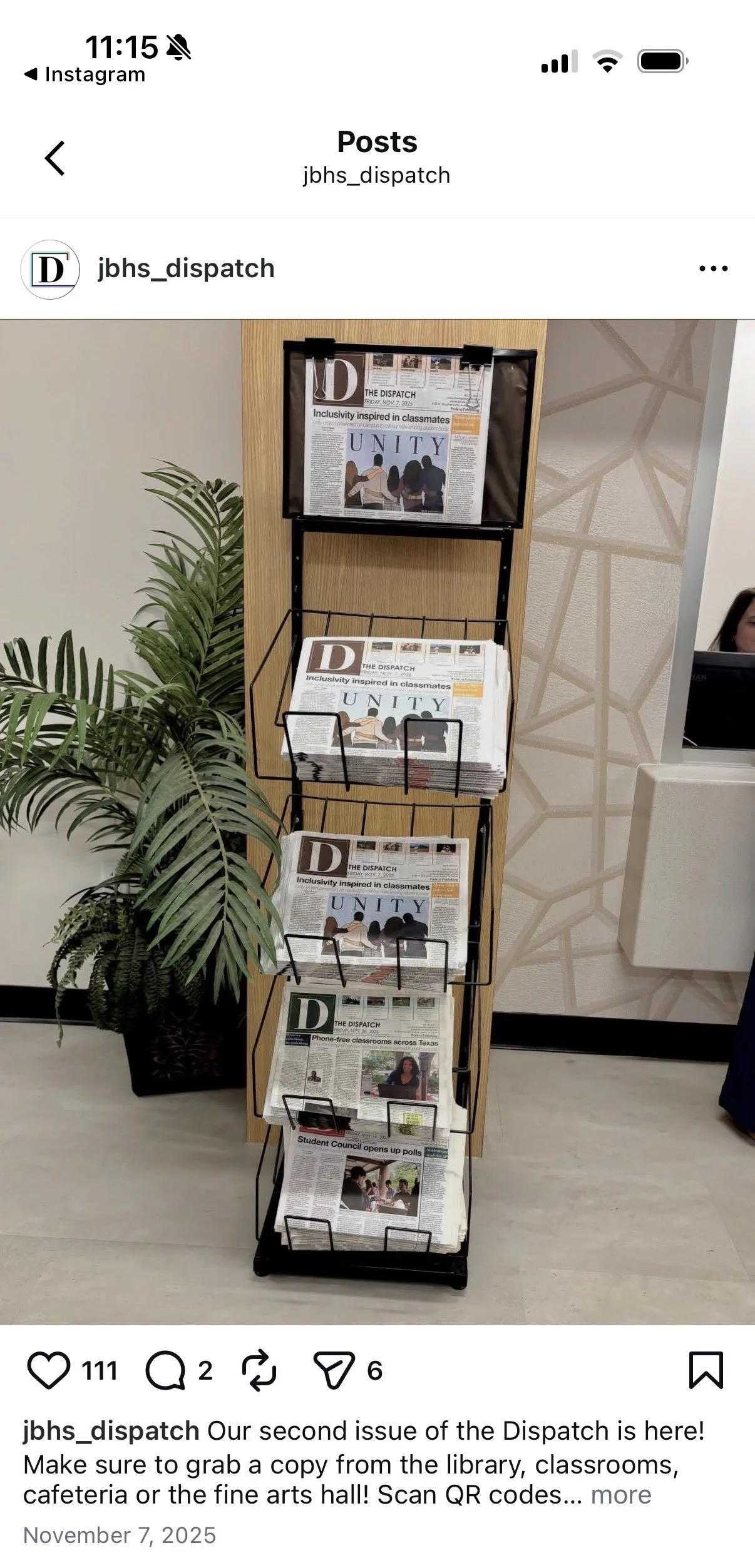
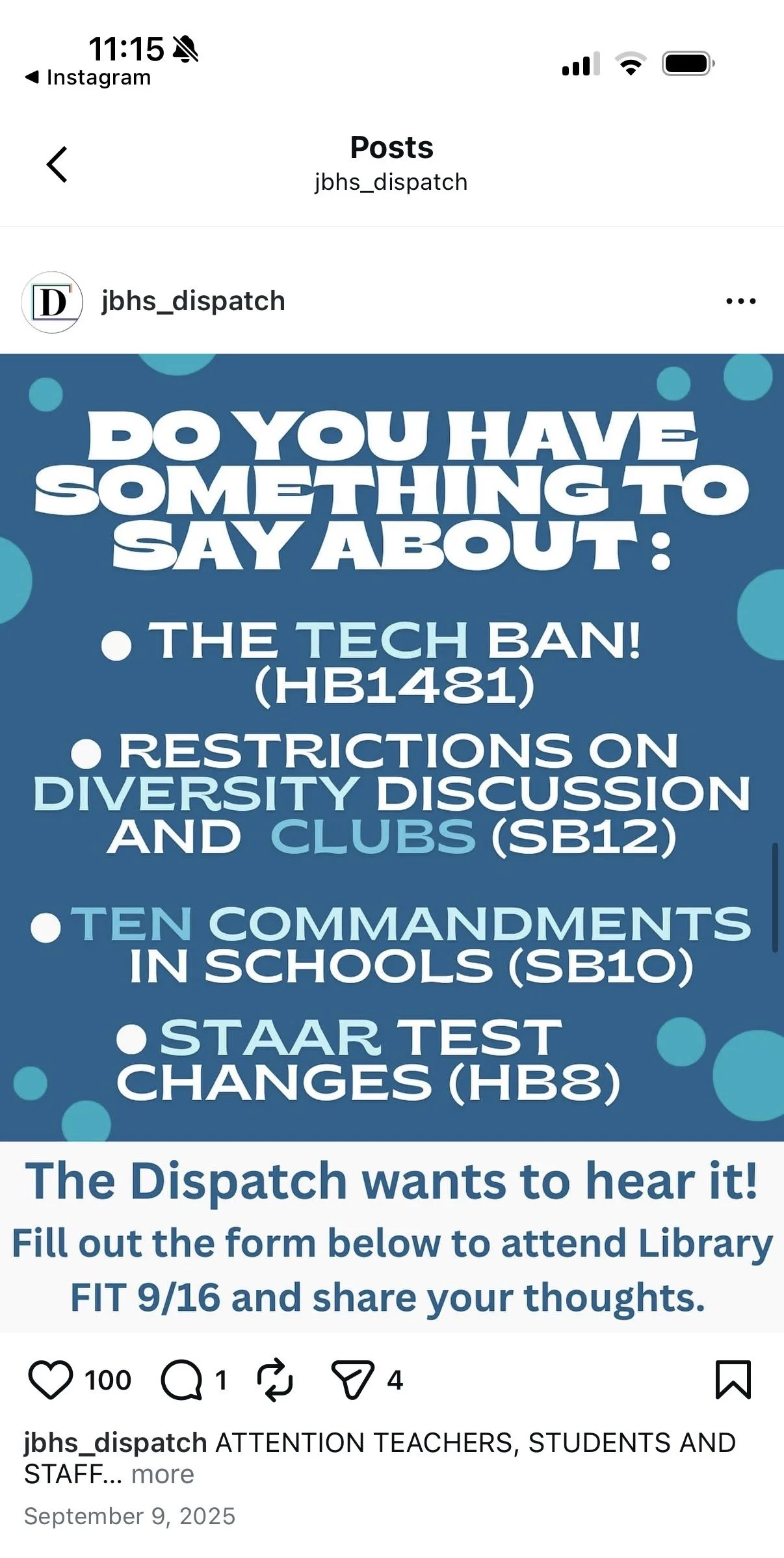
However, we have found some ways in the past few years to use our social media to promote and connect students with our website and print edition. This includes:
-posting updates on print distribution day that detail where you can find the paper around the school
- posting teasers for print stories when they hit the website
and other examples.
Additionally, last year we tried something a little different because our budget had a little more wiggle room. We mailed our papers home to every student. To do this we needed to sit down and discuss the specific issues we believed our peers would want to engage with the most. What did issues they care about, what would they read? We got a lot of praise over emails from parents, and It seemed as though the student body was more engaged overall this year
Personally, one thing I did to try to ensure our dispatch was covering things our students wanted to hear about was with something called ‘the round table.’ I started this at the beginning of this school year, sending out a google form inviting students to an advisory for the sole purpose of hearing the things they wanted us to report on. It was very enlightening. Many things I heard surprised me but it was important to me that I listened. I ended up interviewing multiple students for my first story this year, Statehouse to Schoolhouse.
Law, Ethics, and News Literacy
One of our biggest advantages as a publication is our protection against censorship. Our advisor advocates for us to have freedom of press to cover issues that are truly and really effecting our student body. This is big, especially for me and my fellow In-depth reporter who often write about hard-hitting issues that other student programs may not be willing to tackle. Because of this advantage it has become incredibly important to me to advocate for that in any ways that I can.
My sophomore year, our advisor introduced us to something called ‘New Voices Texas,’ while I wasn’t a member, I still wanted to be a part of it. In the spring of my junior year I joined a group of advocates at the Texas Capitol to inform legislators about the impact of policy on journalistic freedom and why it’s important that we have that freedom to report accurately for the sake of educating our peers.
On that note, one thing that has been incredibly important to me as a student journalist is working ethically within the bounds of our journalistic freedom. In my investigative reporting, I hold myself to an incredibly selective standard when it comes to citing statistics or quoting interviewees. Misinformation and Disinformation are the biggest enemies of impactful journalism, so I always triple check the context, validity and relevance of all the data present in my stories, and cite it just as meticulously. Additionally, if I have access to an expert, I will interview them, and if I don’t I will find one. In my Protest in Music story, my Saving the Bees story, and my Youth in Activism story (found on the website) I used my resources to reach out to experts in the field and gain trusted information to fuel my stories.
I hold all of our staff members to the same expectations. If a story, even a subjective one, cites data without context, relevancy, or validity, I ensure I make it known to them to importance of backing up claims with credible data.
Commitment to Diversity
Commitment to diversity is incredibly important to me, especially because it can be overlooked in a community like ours. That is one of the main reasons I started the concept of the ‘round table’ where students would be able to come to us with things they felt weren’t being covered like they wanted them to. As journalists, it is our job to look at the big picture, find all perspectives and viewpoints, and that can often be hard in a school so big where many students feel they can’t speak up.
In the first session of round table, I heard from a few students who openly voiced to me their frustration for issues they felt no one was talking about. One student in particular voiced to me that he felt it was hard for him to speak up about his beliefs because he felt he would bullied or looked down upon for being or thinking differently than some of his peers. So, naturally, I felt a need to include this students voice in my story about the new legislation, regardless of it it aligned with my own voice. It is my responsibility in the name of good journalism, to give readers the big picture of diverse viewpoints and give a voice to every student, especially those who can’t speak up, or feel they can’t.
In my writing, I try to accomplish the same commitment to diversity as I do with interviews and hearing from students. I like to cover issues that are most pressing to my peers, like new legislation, e-cigarette usage and others, but I also like to give a voice to the issues that don’t often get coverage. In Volume 37, issue 3, I covered a story on the decline in honey bee population and the work our bee club was doing at a local level. When interviewing the bee club president, she seemed surprised that I had such an interest in the bee club and a concern or, at that, a knowledge of the bee population decline and how it was effecting our environment. A big driving point of her answers in that interview was that "no one really knows how big of a problem this is.” I gave that problem, and it’s solutions a voice, and that’s what diversity really means to me; giving a voice to everyone, with equity in the passion and depth for which it is covered.